

ToolsUnpacked analysis · September 30, 2026 · By Shelton Lesperance
SpaceX orbital AI is becoming a real engineering question, not just a science-fiction headline. SpaceX plans AI-computing satellites of its own, while other companies are preparing experimental AI payloads for launch on SpaceX rockets. But edge AI satellites, hardware experiments and full orbital data centers solve different problems—and none should be described as the same mature service.
As of September 30, SpaceX’s published mission schedule lists the Transporter-18 mission for October 1. Google is preparing an orbital test of its TPU hardware, and Indian startup TakeMe2Space has described a separate satellite designed to run customer AI inference near the data it collects. These projects highlight where launch services can help AI research without implying that SpaceX built every payload. (Google’s September 24 Project Suncatcher update; Reuters’ September 28 reporting on TakeMe2Space)
How SpaceX Orbital AI Could Change Edge Computing
Today’s typical AI pipeline captures data on a device, sends much of it to a terrestrial server, runs inference or analysis and returns the result. An edge-computing satellite tries to do more of that work on board. An orbital data center is a different ambition: a much larger network of computing hardware intended to serve workloads at scale.
Moving inference closer to where space imagery is collected could reduce the volume of information sent to the ground. If a satellite detects a flood boundary or crop change, sending a compact result instead of every raw image may save bandwidth and shorten the useful decision loop. Those benefits depend on the task; they do not make every cloud application a candidate for space.
1. What SpaceX is actually contributing today
SpaceX’s near-term contribution to third-party orbital AI is launch capability. Reuters’ September 28 reporting on TakeMe2Space reports that TakeMe2Space’s planned MOI-1A satellite, carrying Nvidia Orin NX edge processors, is scheduled for the Transporter-18 rideshare mission. Customers are expected to upload containerized AI models and receive processed results from the satellite.
This is an important distinction for a technical reader: TakeMe2Space develops and operates its AI payload; SpaceX provides the launch. A rocket company enabling an experiment is not the same as that company operating the experiment or guaranteeing the application’s performance.
Google, meanwhile, describes Project Suncatcher as a research program to test how TPUs behave in space and eventually explore clustered, solar-powered machine-learning infrastructure. Its September 2026 update discusses radiation, thermal control and future laser links. Treat the announced flight as scheduled until the launch and test results have been confirmed. (Google’s September 24 Project Suncatcher update)
2. SpaceX’s own plan: Starmind and much larger compute satellites
SpaceX is also proposing an AI satellite system of its own under the Starmind name. SpaceX’s Starmind AI-satellite overview describes solar-powered computing modules and laser-linked networking, with a factory and broader deployment ambitions. It is a company roadmap, not public proof that a mass-market orbital AI cloud is already available.
The potential infrastructure benefit is access to solar energy and the possibility of deploying new compute without the same local land and grid constraints as terrestrial data centers. But the economics depend on far more than sunlight: launch mass, replacements, radiation tolerance, communications and long-term maintenance still need to work together.
Why cooling in space is harder than the headline suggests
Space is cold in some senses, but vacuum is not a giant air conditioner. Ordinary servers use air or liquid systems that ultimately reject heat into their surroundings. In space there is no surrounding air to carry heat away by convection, so spacecraft must transport heat internally and radiate it outward through suitable surfaces.
Google says its researchers are testing combinations of heat pipes and radiators. That makes thermal engineering a central experiment, not an already-solved advantage. (Google’s September 24 Project Suncatcher update)
3. The three constraints every engineer should watch
- Radiation and fault tolerance: high-energy particles can corrupt computations or damage electronics. Systems need strategies for detection, recovery and graceful degradation.
- Power and thermal budgets: a model’s performance is constrained by electrical input and how quickly the hardware can reject waste heat.
- Communication and autonomy: orbital platforms must manage intermittent links, transmission capacity and processing decisions without assuming uninterrupted ground connectivity.
NASA’s high-performance spaceflight computing program identifies power management, fault tolerance, onboard autonomy and connectivity as core space-computing requirements. These are the same engineering concerns that make terrestrial edge AI difficult, amplified by an environment where an operator cannot walk into the server room and replace a failed part.
4. What a Linux or cloud engineer can test today
You cannot reproduce orbital radiation in a laptop lab. You can, however, test the software architecture behind the edge-computing argument using an ordinary Linux machine and a constrained network connection. Treat this as an educational simulation, not a reproduction of any SpaceX or Google system.
- Choose a narrow workload: classify a small batch of sample images or detect a simple event from sensor records locally.
- Package the workload: use a container and pin the model and software versions, so outputs remain reproducible.
- Reduce the payload: send a timestamped prediction and confidence value instead of uploading every raw input. Compare transmitted bytes.
- Simulate link interruptions: queue results locally, retry with backoff and avoid sending duplicate events after reconnection.
- Measure failure: record power or CPU usage, model latency, dropped events, storage growth and recovery behavior.
The important question is not whether the model runs once. It is whether you can explain exactly what happens when the network disappears, the disk fills or the inference process crashes.
Our Linux production incident walkthrough provides a starting point for those cross-layer diagnostic skills. Also see our practical AI tools for Linux SysAdmins for earthbound workflows you can evaluate now.
5. Where orbital AI could change practical software
Three kinds of applications are worth monitoring. First, Earth-observation analysis that produces a small result from a large raw dataset. Second, onboard autonomy for spacecraft where the time or bandwidth needed to consult Earth is impractical. Third, long-term experiments exploring whether clustered orbital processors can economically serve larger AI workloads.
The first two involve targeted processing and decision support. The third is a much larger infrastructure claim, and it remains subject to hard technical and commercial testing. The existence of a prototype does not establish that training large models in orbit will beat a terrestrial cluster on price, energy or reliability.
The bottom line: look past the launch headline
SpaceX makes orbital AI experiments more accessible through launch services and is pursuing its own orbital computing concept. Google and TakeMe2Space are testing their own approaches. The most transferable lesson for AI-tool builders is straightforward: put compute where it is useful, send only what is necessary, and engineer for the failure modes of the environment.
If you want to apply that mindset to systems you can troubleshoot today, explore Infrastructure War Room Pro founding access. Its current pilot labs and planned v1.x additions focus on Linux, cloud and database incidents. ToolsUnpacked is independent of SpaceX, Google and TakeMe2Space.
Sources and date note
- SpaceX’s Starmind AI-satellite overview — SpaceX’s stated orbital AI plans, not proof of production deployment.
- Google’s September 24 Project Suncatcher update — current TPU and cooling test program.
- Google’s original Project Suncatcher research announcement — original research roadmap.
- Reuters’ September 28 reporting on TakeMe2Space — planned MOI-1A launch and customer inference model.
- NASA’s high-performance spaceflight computing program — independent engineering constraints.
- SpaceX’s published mission schedule — mission schedule as published at the time of writing.
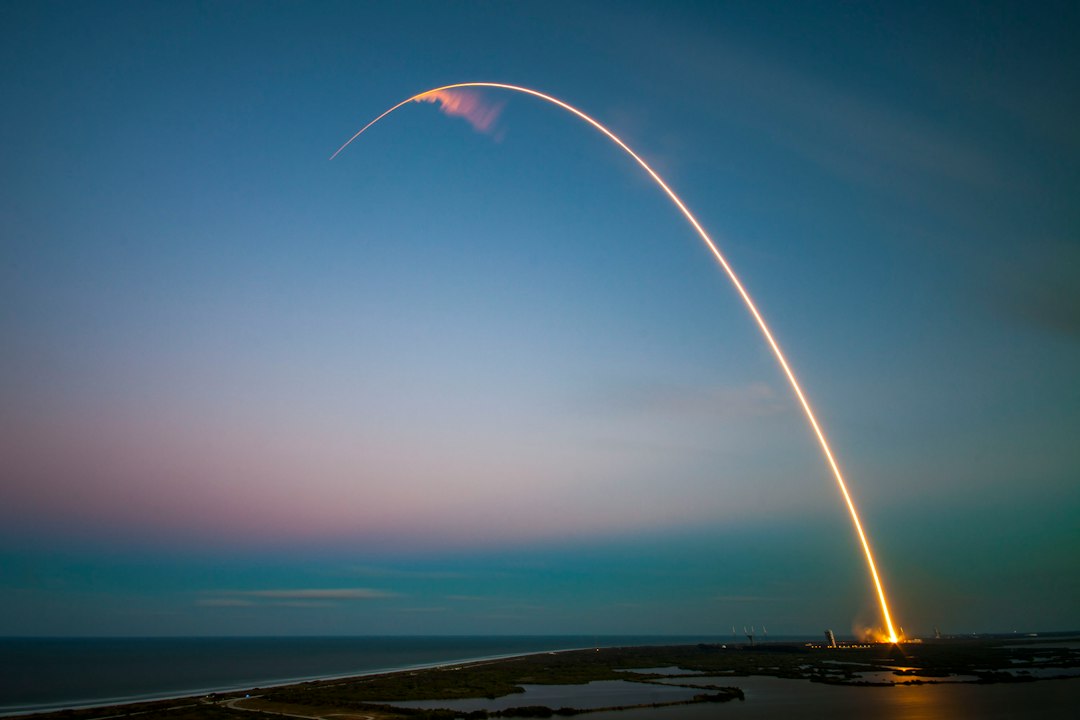
Reporting cut-off: September 30, 2026. The October 1 launch is described as scheduled, not completed. Future missions, product specifications and outcomes may change. Featured launch photograph: SpaceX / Unsplash; it illustrates launch capability, not an orbital AI satellite.
Stop watching. Start solving.
Practice Linux, AWS, PostgreSQL, and cross-layer production incidents with evidence packs, progressive hints, scoring, and validation.
One Comment