

ToolsUnpacked analysis · September 30, 2026 · By Shelton Lesperance
SpaceX and xAI are changing AI infrastructure in a practical way: by bringing AI models, large-scale computing and an existing satellite-connected customer network into one company. That matters to anyone building or buying AI tools, but it does not mean SpaceX has already solved AI reliability, cost or computing in orbit.
SpaceX announced its acquisition of xAI in February 2026. Its subsequent disclosures describe terrestrial AI computing facilities alongside a longer-term orbital-computing ambition. Meanwhile, Starlink’s Grok-powered support assistant provides a more immediate example of AI embedded in an operational service. These are three very different stages of technology maturity. (xAI’s February 2026 announcement; SpaceX’s SEC filing on its AI infrastructure; Starlink’s 2025 Progress Report)
1. How SpaceX and xAI Depend on More Than a Model
Ask most people what makes an AI tool effective and they will name the model. Infrastructure engineers ask another question: can the service respond quickly, retrieve the right context, handle failures and remain affordable when demand spikes?
The SpaceX–xAI combination links a model business to large-scale computing and distribution. SpaceX describes its Colossus facilities as major terrestrial AI training and inference infrastructure in its public filings. These descriptions are the company’s claims about its own systems, not independently verified benchmarks showing that every workload will run faster or cheaper. (SpaceX’s SEC filing on its AI infrastructure)
For a small business choosing AI writing assistants, coding tools or customer-support automation, the useful lesson is to measure complete workflows. A powerful model that repeatedly times out during document retrieval may deliver less business value than a smaller model with reliable integrations and well-managed latency.
- Measure end-to-end task completion and response time, not just generated-token speed.
- Track how much each successful task costs, including retrieval, retries, storage and human review.
- Test tools with your own messy documents and failure conditions instead of relying solely on product demos.
2. Starlink shows what operational AI integration can look like
There is already a practical application, separate from future orbital data centers. Starlink’s 2025 Progress Report says Starlink improved its Grok-powered customer-support assistant in 2025, enabling account-aware assistance, hardware diagnostics, replacement orders, service credits and advanced troubleshooting.
That is more meaningful than simply adding a chatbot to a help page. A useful support assistant needs authorized access to account context, service information and operational actions. What follows is an engineering recommendation, not a claim about Starlink’s undisclosed internal architecture: any company attempting a similar system should consider narrow tool permissions, auditable actions, redacted logs and a human escalation path.
A practical checklist for evaluating AI support tools
- Context: Can the assistant retrieve the right ticket, configuration and service history?
- Action: Can it safely perform permitted tasks rather than inventing a troubleshooting answer?
- Evidence: Does it show why it recommends a change and record what action was taken?
- Escalation: Does it hand off clearly when confidence is low or the request is high-risk?
These questions also apply to AI agents managing WordPress content, answering SaaS support tickets or helping Linux teams investigate incidents. The model may write the sentence; permissions, retrieval and operational telemetry determine whether you can trust the workflow.
3. More AI compute brings old infrastructure problems at a bigger scale
Training and running advanced models requires accelerators, networking, storage, power and cooling. At large scale, availability is an infrastructure design problem: a healthy server is not enough if the storage path, network fabric or upstream service is failing.
A Reuters’ April 2026 examination of AI spending detailed the scale of SpaceX’s AI-related capital spending and the contrast between Starlink’s operating performance and the costs of expanding AI. The business implication is important: building compute capacity is an investment, not automatic evidence that the economics of an AI tool have been solved.
For Linux and cloud engineers, the familiar diagnostic sequence still applies: check symptoms, identify the constrained resource, trace dependencies and validate recovery. An AI platform can look healthy at its API gateway while requests are waiting on a downstream data store, quota or accelerator queue.
If you support production services, our five Linux production-incident walkthroughs show how to investigate exactly this kind of cross-layer mismatch.
4. SpaceX’s orbital ambition is a research and deployment challenge, not a finished service
SpaceX says it intends to extend AI computing into space by combining its launch, satellite-manufacturing and connectivity capabilities. A stated roadmap is different from a mature, generally available orbital cloud platform. The biggest open questions are hardware survivability, thermal management, networking, maintenance and cost.
This distinction matters because a headline about future orbital data centers should not be treated as a feature you can buy for your application today. We examine the actual satellite tests, along with those engineering constraints, in our companion article on SpaceX, orbital AI and edge computing.
5. What AI-tool buyers and engineers can apply today
The most valuable takeaway from SpaceX’s expanding AI strategy is the importance of the full technology stack. You do not need a giant training cluster to adopt the same operational discipline.
- For AI-tool buyers: run one real workflow from input to reviewed output and calculate the total cost.
- For developers: log latency, retries and tool calls; restrict actions that modify production systems.
- For SysAdmins: test dependencies and failure recovery before an AI assistant is allowed to automate routine infrastructure tasks.
- For creators: choose a narrow use case and publish evidence about how a tool performs instead of repeating model-launch claims.
We cover applied examples in our AI tools for Linux SysAdmins guide. The same operational approach scales from one AI assistant to a large enterprise platform.
The bottom line
SpaceX is contributing to AI in two demonstrated ways: integrating xAI’s model business with terrestrial computing infrastructure and putting Grok-powered workflows into Starlink support. Its proposed space-based AI infrastructure may open another chapter, but that remains an engineering and economic challenge. The practical opportunity for readers is to build AI tools that complete real work safely and stay reliable when their dependencies do not.
Ready to practice production troubleshooting? See Infrastructure War Room Pro founding access, including current pilot labs and planned v1.x expansions. It is an independent ToolsUnpacked training product, not affiliated with SpaceX or xAI.
Sources and editorial note
- xAI’s February 2026 announcement — confirms the acquisition announcement.
- SpaceX’s SEC filing on its AI infrastructure — company disclosures about AI infrastructure and expansion plans.
- Starlink’s 2025 Progress Report — documented Grok-powered Starlink support features.
- Reuters’ April 2026 examination of AI spending — independent reporting on financial and infrastructure trade-offs.
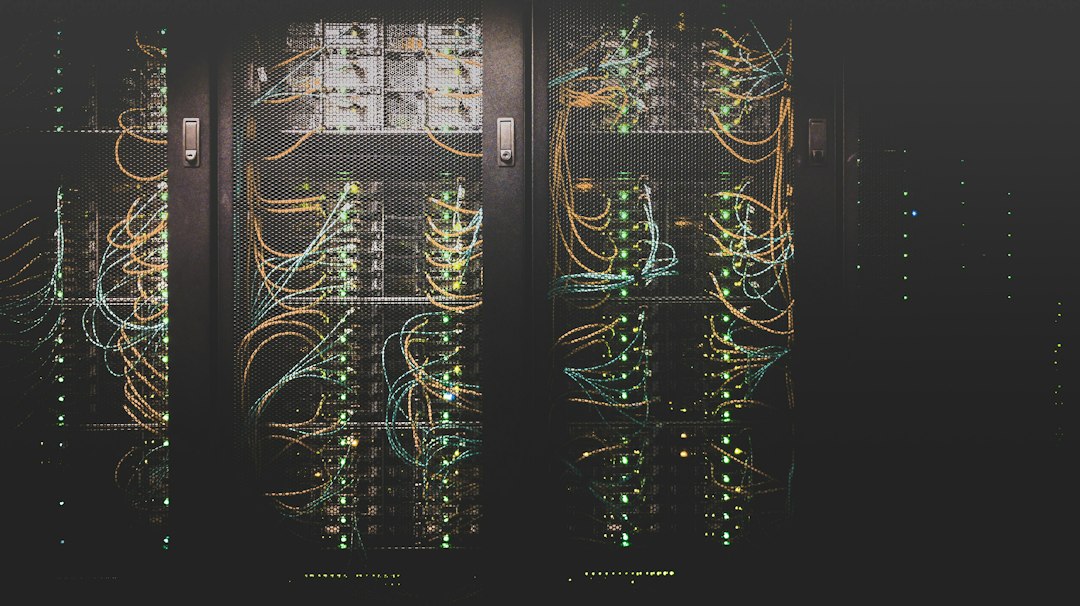
Editorial note: This article distinguishes publicly documented capabilities from company plans and from ToolsUnpacked’s own operational recommendations. Product capabilities and launch plans may change after September 30, 2026. Featured photograph: Taylor Vick / Unsplash, illustrating a data center rather than a SpaceX facility.
Stop watching. Start solving.
Practice Linux, AWS, PostgreSQL, and cross-layer production incidents with evidence packs, progressive hints, scoring, and validation.